 English
  English
 Views: 500 Author: Site Editor Publish Time: 2026-09-01 Origin: Site
I. Behind the Surge in Computing Power, Heat Dissipation Is Becoming the New "Performance Ceiling".
The year 2026 is widely regarded in the industry as the first year when AI liquid cooling will be widely implemented. NVIDIA officially announced in June that the Vera Rubin platform, which will be mass-produced in the autumn, will adopt a 100% full liquid cooling architecture, completely eliminating the built-in fans in the chassis, and the power consumption of a single chip will exceed 1000W, and the power density of a single cabinet will soar to 220kW - this is almost 5-7 times the upper limit of traditional air-cooled cabinets. According to CICC's calculation, the global AIDC liquid cooling market space in 2026 will reach 114.7 billion yuan, a year-on-year increase of 273%.
For a time, concepts such as liquid cooling plates, cold plates, immersion cooling, and diamond thermal sheets have successively become the focus of the industry. However, in this wave of heat dissipation technology upgrades, there is one material that is often overlooked by the outside world - it is neither the latest black technology nor the most expensive solution, but it exists in almost every high-performance electronic device, silently undertaking the "first line of defense for heat diffusion" responsibility.
It is synthetic graphite sheet material.
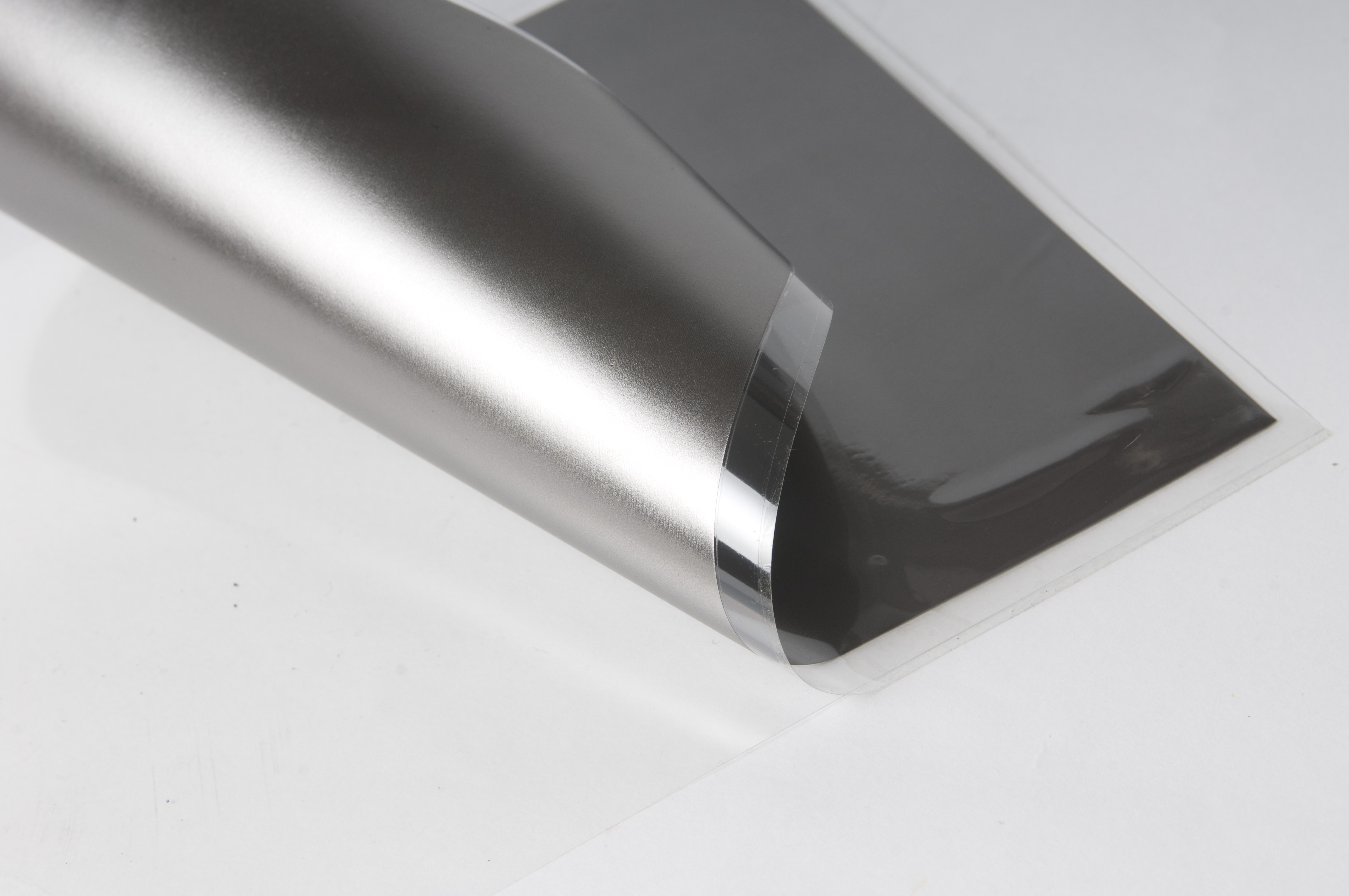
II. The Underappreciated "King of Heat Diffusion": The Fundamental Physics of Graphite Sheets
Many people's understanding of graphite sheets is limited to "a thin film in a mobile phone", but few truly grasp its irreplaceability.
From a physical perspective, heat dissipation involves two key aspects: heat diffusion (converting point heat sources into surface heat sources) + heat extraction (transporting heat away from the system). Liquid cooling, heat pipes, and Vapor Chamber excel at the latter, while graphite sheets are precisely one of the optimal solutions for the former.
Core performance parameter comparison
Table
Materials | In- thermal conductivity (W/m・K) | Thickness | Density (g/cm³) |
Synthetic graphite sheet | 1200 – 2000 | 17 – 100 μm | ~2.1 |
Copper | ~401 | > 200 μm | 8.96 |
Aluminum | ~237 | > 300 μm | 2.7 |
Natural graphite sheet | 300 – 500 | 100 – 500 μm | ~1.5 |
Data Source: Compilation of Industry Public Technical Parameters
This set of data reveals a key fact: The in- thermal conductivity of high-quality synthetic graphite sheets is 3-5 times that of copper, while their weight is approximately 1/4 of copper, and their thickness can be 1/10 that of copper foil.
This "extremely thin and lightweight + extremely high in- thermal conductivity" characteristic gives graphite sheets a natural advantage in handling local hotspots - a 1mm² high-temperature point on the chip surface, after being attached with graphite sheets, can spread to tens of times the area within a few milliseconds, significantly reducing the heat flow density, and relieving the subsequent liquid cooling or air cooling systems.
III. From Mobile Phones to AI Servers: Graphite Sheets Are "Breaking Through Upward"
Over the past decade, the main battlefield of graphite sheets has been consumer electronics. The trend of thinning smartphones, tablets, and laptops has made graphite sheets a standard heat dissipation material. According to the "New Type Electronic Functional Materials Industry White Paper (2025)" of the Ministry of Industry and Information Technology, the market size of synthetic graphite sheets in China will reach 9.84 billion yuan in 2026, with a year-on-year growth of 12.7%, and the industry continues to expand steadily.
However, the change that truly deserves attention occurred in the high-end computing power field.
As the power consumption of AI servers' GPUs soared to kilowatt levels, a single liquid cooling solution could not solve all problems. In the internal chip packaging, around HBM memory, and in the power module area, there are still many local high heat flow density areas that require graphite sheets to complete "primary heat diffusion", and then be "secondary heat conducted out" by the liquid cooling plate.
Industry research shows that the current usage area of graphite sheets on mainstream AI server motherboards has increased from less than 50cm² in the early days to 200-350cm², and some high-end models even attach graphite composite materials in multiple places such as the GPU back, memory module, and network card chip.
Graphite sheets are upgrading from "consumer electronics auxiliary materials" to "functional materials for computing infrastructure".
IV. Deep Water Zone of Technology: Why Single-Layer Thick Graphite Has Become the Competitive Divide?
The technology threshold for ordinary graphite sheets is not high, but for high-reliability scenarios such as servers and automotive electronics, the technical barriers rapidly rise. The most representative breakthrough direction is the single-layer thick graphite process.
In traditional solutions, to achieve a thermal conductivity thickness of 100μm or more, a multi-layer graphite sheet is usually combined and bonded. However, the bonding layer itself is a thermal resistance, and after multiple layers are stacked, the actual thermal conductivity efficiency will be reduced, and there is a risk of delamination under long-term high-temperature conditions.
Single-layer thick graphite is directly formed through one-time sintering of ultra-thick PI base film, without any bonding layer in the middle. Its thermal resistance is lower, reliability is higher, and the heat conduction effect is better. It is understood that domestic enterprises have already broken through this technical bottleneck.
Jiangxi Dasen Technology solved the problem of ultra-thick PI sintering technology in 2021, successfully sintering single-layer graphite sheets with a thickness of up to 100μm. The samples passed the performance tests of Samsung headquarters in South Korea. Compared with the multi-layer composite solution, single-layer thick graphite has significant advantages in reliability, consistency, production efficiency, and cost control, especially suitable for 5G/6G terminals, industrial electronics, automotive electronics, and other scenarios with strict requirements for long-term stability.
Currently, Dasen's graphite sheets series cover the full thickness range from 17μm to 100μm, including DSN5017, DSN5025, DSN5040, DSN5100, etc., and can be flexibly selected according to different heat flow densities, space limitations, and bending requirements. The products are widely used in consumer electronics, communication equipment, new energy, and AI computing power-related fields.
In addition to the thick graphite direction, technology routes such as graphite + copper foil composite, graphite + phase change material composite, and surface microstructure modification are also evolving rapidly. Graphite sheets are evolving from "single material" to "functional composite material components".
V. Conclusion: In the Liquid Cooling Era, Graphite Sheets' Value Has Been Amplified
There is a view that after the popularity of liquid cooling, graphite sheets will be replaced. However, from the actual evolution path of the industry, the conclusion is exactly the opposite.
Liquid cooling solves the problem of "system-level heat dissipation", while graphite sheets solve the problem of "microscopic heat diffusion". The higher the power consumption and the greater the heat flow density, the more prominent the local hot spot problem is, and the more significant the value of graphite sheets as a "heat buffer layer" and "heat conduction layer".
New materials such as diamond and silicon carbide may occupy the high-end market in the field of chip-level heat dissipation patches, but from the perspective of cost performance, processability, and large-area adaptability, synthetic graphite sheets will remain the mainstream choice for medium and large-scale heat diffusion scenarios in the foreseeable future.
For equipment manufacturers, a truly rational heat dissipation strategy is never "selecting a single black technology", but building a "multi-level heat dissipation system including graphite sheet heat conduction + VC / heat pipe conduction + liquid cooling / air cooling final output" hierarchy.
In this race of computing power and heat, each layer of material has its irreplaceable position. And graphite sheets are precisely that most fundamental and also the most underestimated key link.