 English
  English
 Views: 500 Author: Site Editor Publish Time: 2026-06-03 Origin: Site
In the context of the continuous increase in power density of AI servers, the cooling system is shifting from "single-point cooling" to "system-level thermal management". When the power consumption of a single chip enters the range of 700W or even 1000W+, relying solely on cold plates or liquid cooling is no longer sufficient to address local hotspots. The industry is beginning to reevaluate the value of "thermal diffusion layers" - graphite sheets are moving from traditional auxiliary materials to key thermal management components in high heat flux density scenarios.
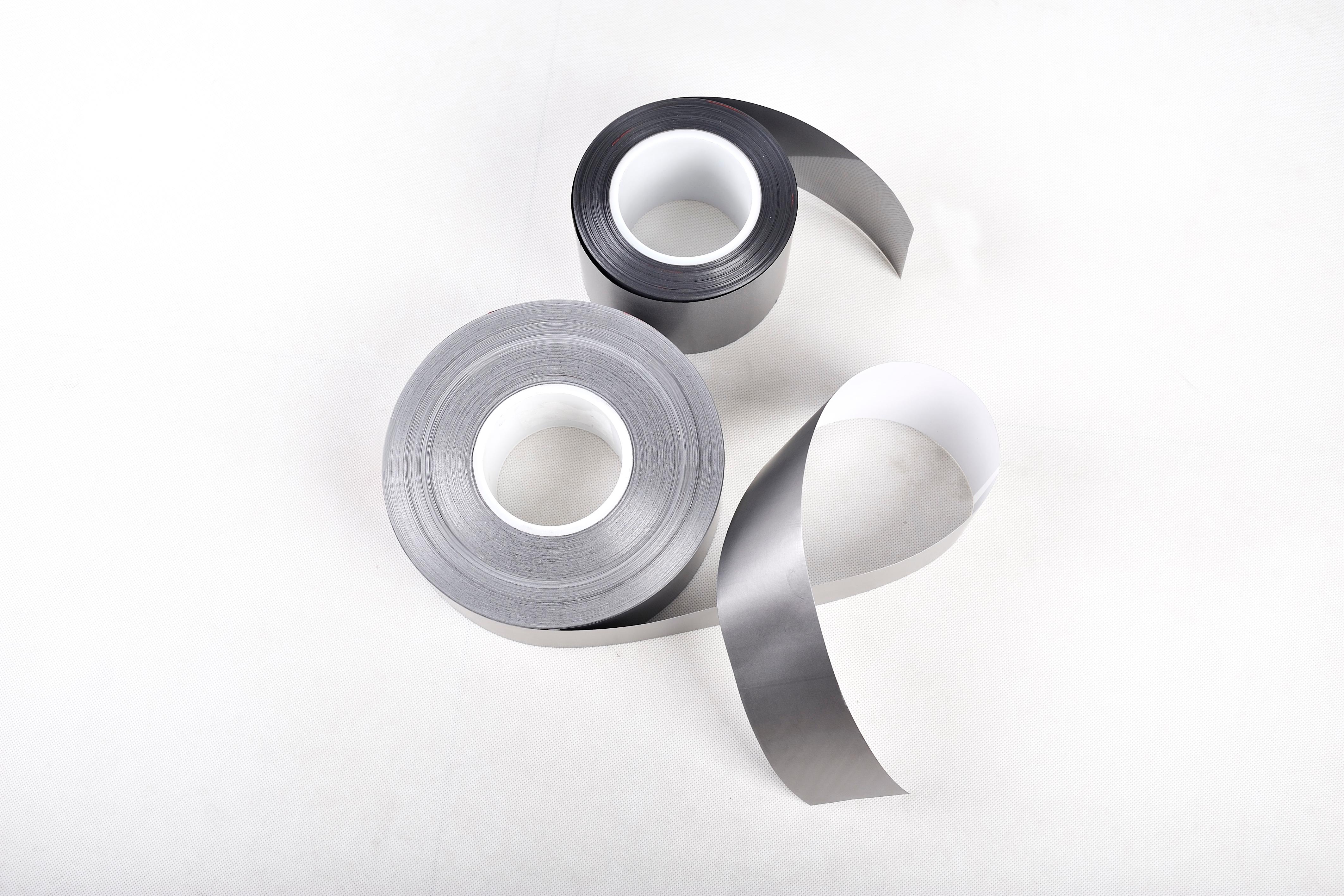
Thermal Dissipation Logic Reconfiguration: From "Extraction of Heat" to "Uniform Heat Flow"
In the traditional thermal dissipation system, the core objective is to quickly transfer heat from the chip to the cooling plate or heat sink. However, in the context of AI servers, the heat flow density in the hotspots is much higher than the average level, and local temperature rise has become the key factor limiting performance release.
Therefore, the thermal dissipation logic is undergoing three changes:
Priority of heat diffusion is enhanced
Rather than blindly increasing cooling capacity, how to achieve rapid lateral diffusion on the chip surface and reduce the peak temperature of the hotspots has become a better approach.
Role of materials is upgraded
Graphite sheets, which were previously "auxiliary heat conducting materials", have been upgraded to "core layer for heat diffusion", directly affecting the temperature distribution and stability of the chip.
Reconfiguration of performance dimensions
The thermal conductivity of graphite sheets within the surface can reach 1500–2000 W/m·K, significantly higher than that of metals such as copper and aluminum. It is irreplaceable in the "point → surface" heat diffusion process.
Material Evolution: Graphite Sheets Are Moving Towards High-End and Structured Forms
For HPC and AI server scenarios, graphite sheets are no longer a single material but are evolving towards the "high performance + structural adaptation" direction:
High thermal conductivity artificial graphite sheets
Forming a highly oriented structure through high-temperature graphitization to achieve extremely high in- thermal conductivity, and have been widely used in GPU, HBM, and power supply area hot spot diffusion.
Composite structure graphite sheets
By combining with copper foil, PI film, etc., to enhance mechanical strength while improving insulation performance, meeting complex packaging requirements.
Customized structural design
For different chip and module layouts, conducting detailed design of thickness, thermal path, and coverage area to achieve more efficient system-level heat dissipation matching.
Industrial Practice: Graphite Sheets Shift from "Optional" to "Required"
As AI servers evolve towards higher power density, the application of graphite sheets is moving from "local assistance" to "system standard configuration".
In actual projects, some manufacturers with material and process capabilities have begun to deeply participate in the design of server cooling structures. For instance, Dasen has continuously invested in high thermal conductivity graphite sheets. Its products demonstrate strong engineering adaptability in terms of thermal uniformity, thickness control, and stability, and have gradually entered scenarios related to AI servers and high-performance computing.
The value of these manufacturers lies not only in the performance of the materials themselves, but also in their ability to customize designs based on the thermal distribution of chips, helping customers optimize thermal management solutions at the system level.
Collaborative Heat Dissipation System: The "Central Layer" Role of Graphite Sheets
The new generation of AI server heat dissipation structure is forming clear divisions of labor:
TIM (such as liquid metal/silicone grease): Reducing the thermal resistance at the interface
Graphite sheets: Achieving heat diffusion in the chip and sealed areas
Cold plates/liquid cooling systems: Completing the final heat removal
The graphite sheets are located in the middle layer and play a key role in "heat redistribution", serving as an important bridge connecting the microscopic interface with the macroscopic heat dissipation system.
It is worth noting that it forms a typical collaborative relationship with TIM materials such as liquid metal:
One solves the "contact problem", and the other solves the "distribution problem", jointly determining the upper limit of the final heat dissipation efficiency.
Engineering Challenge: Realistic Constraints Behind High Performance
Although graphite sheets have obvious advantages, the following issues still need to be addressed in high-end applications:
Anisotropy: High thermal conductivity in the , weak in the thickness direction
High fitting requirements: Sensitive to interface flatness and assembly process
Electrical conductivity: Need to be combined with insulation design to avoid short-circuit risks
Long-term reliability: Need to cope with thermal cycling and mechanical stress challenges
This also means that future competition is not only in the material itself, but also in the process capabilities and system integration capabilities.
Value Reassessment: Who is Reaping the Benefits of This Round?
As the demand for AI computing power continues to grow, the industrial value of graphite sheets is being revalued:
Usage increase: From local applications in consumer electronics, it has expanded to widespread coverage in servers
Price increase: High-performance graphite sheets have a higher technical premium
Barriers increase: Manufacturers with the ability to formulate, process, and customize will have a greater advantage
Material manufacturers like Dasen are transforming from "suppliers" to "solution providers", which will also become an important dividing line in future industry competition.
When the bottleneck of heat dissipation shifted from "whether it can remove heat" to "whether it can control heat distribution", the importance of graphite sheets was rapidly magnified.
In the extreme heat design scenario of AI servers, the one who can better solve the hotspot problem is closer to the performance limit. And graphite sheets are becoming the key variable in this answer.